
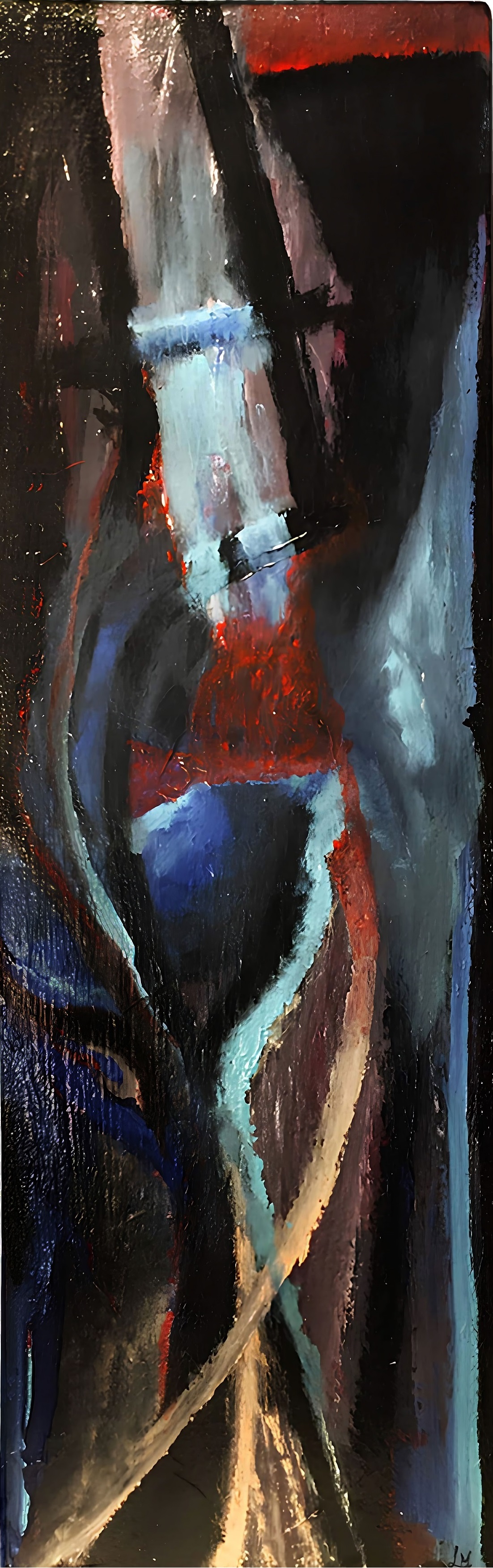
Shadows on the Rock
Origin
Allegory of the Cave¹
Plato, Book VII, The Republic, 380–370 B.C
A visual interpretation of allegory as an archetypal pathway of consciousness. Light and darkness converge in a single movement, generating unprecedented configurations and supersensible structures. The cave is presented as a primordial matrix, in which thought, through a gradual ascent, undergoes the metamorphosis of disillusionment and is oriented toward the contemplation of the Absolute, the principle from which the laws of reality and the understanding of phenomena derive.
¹ The works are a free interpretation of Plato’s Allegory of the Cave:
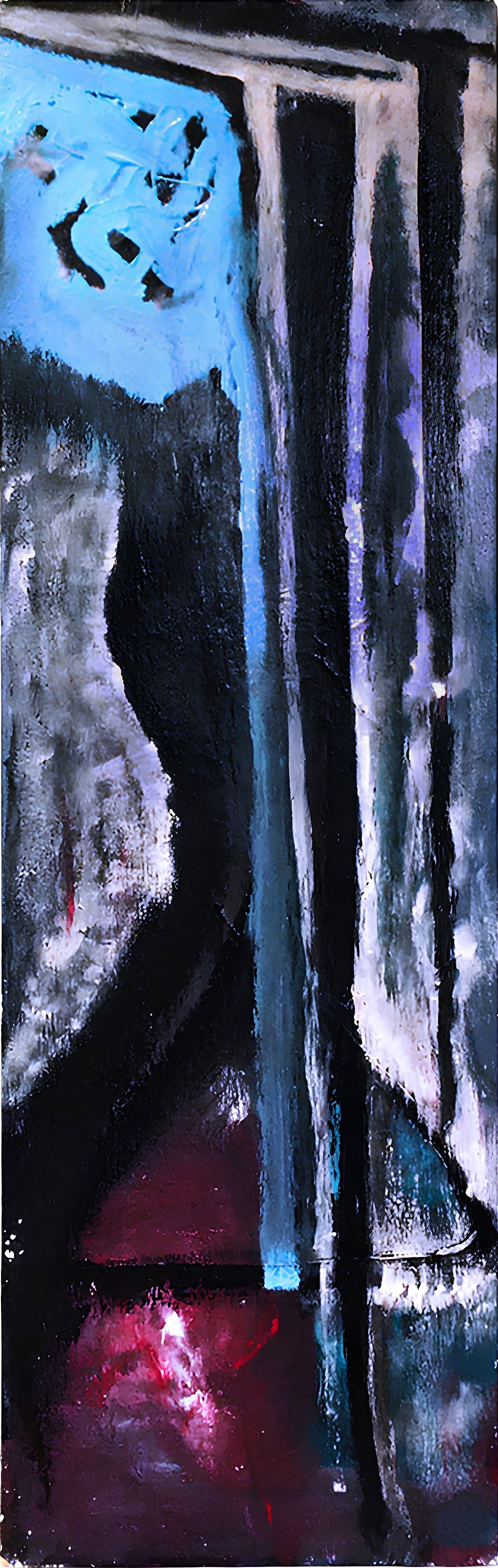
Humans – The original condition of humanity, bound by the chains of appearance.
Shadows on the Rock – The illusions of perception projected onto the cave wall.
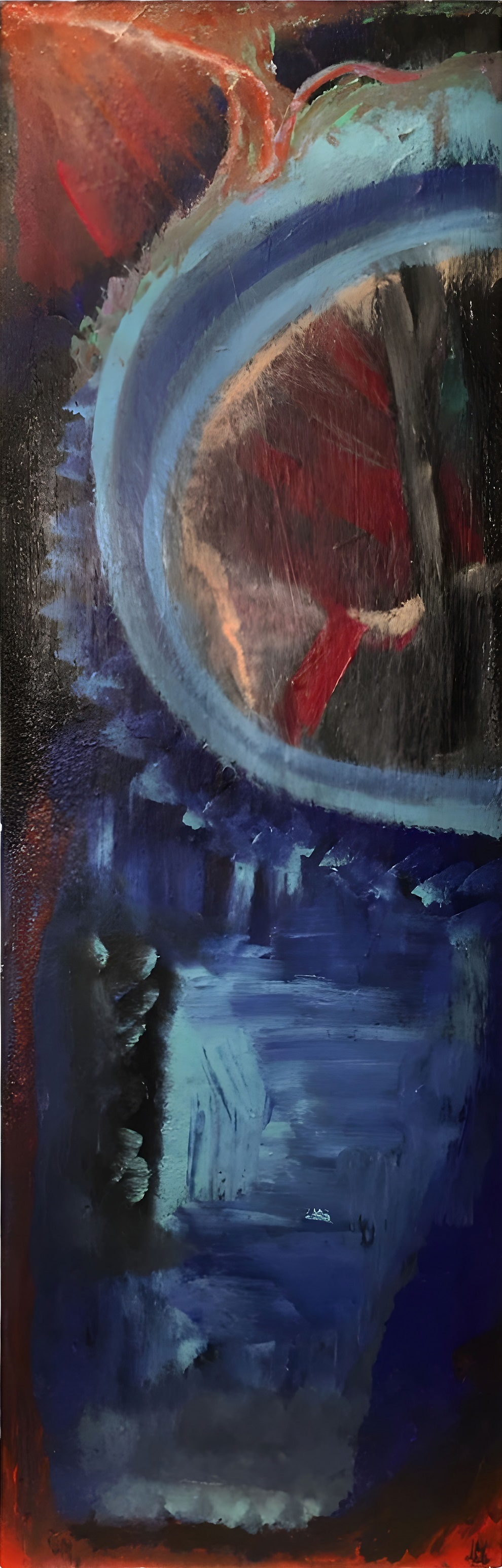
Portal – The threshold of liberation, a passage toward light, knowledge, and inner awareness.
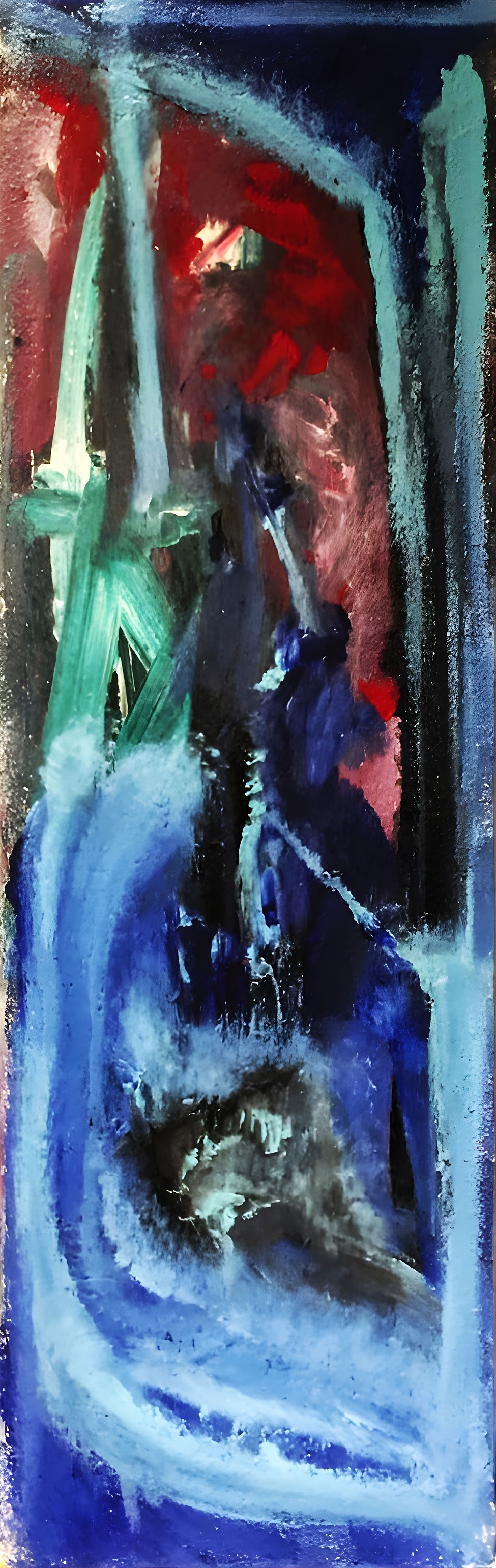
Ecstasy of a Symphony – The harmonic vibration of the universal soul and ultimate reality
About the artist:
Leonardo Mancini is an Italian interdisciplinary author whose research originates from a primordial impulse and manifests in spaces, visual works, and compositions. He holds a degree in Architecture from the University of Florence (IT) and a Bachelor of Arts from the University of Wales (UK). Since 2013, he has exhibited in national and international contexts, participating in group shows and independent projects.
Mancini’s approach integrates science and philosophy in the exploration of the fundamental principles of existence. Through painting and intermedial experimentation, he creates chromatic fields and symbolic forms that evoke cosmic phenomena, natural processes, and inner flows. His technique combines layered glazes and textured surfaces, alternating between deliberate gestures and instinctive movements, between density and rarefaction.
From this practice emerges a continuously evolving visual language, aimed at deepening the understanding of Being.