
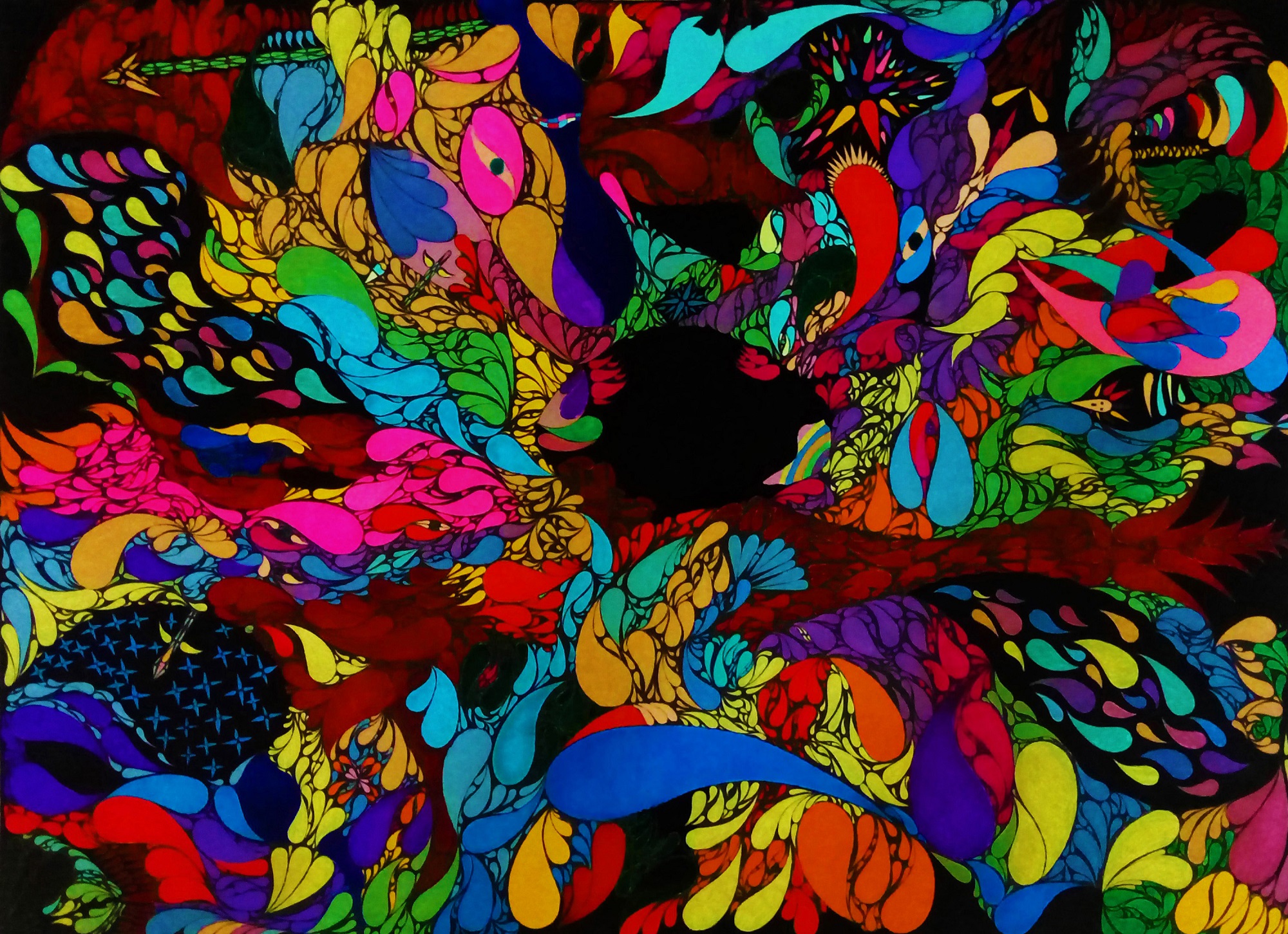
Conquistador by Matthew Morpheus
Where She Was Dwelling
Last week I went searching for that recording of Barbara Allen
where he sings it “Barbry ” with just the right croakiness,
the same version I heard every few days last winter
driving to the editing bay,
dodging sleet, the styrofoam
morning sickness cup
rolling gently in the passenger seat.
All this while the college station earnestly kept faith with the past,
and the sturdy heater warmed my ankles and
steamed the windows, making for me a little cave.
Months later, I’d sit propped against the wall in the closet nursery,
the baby’s shuddering breaths easing into sighs against my neck.
She didn’t mind my nonsense words, the huge gaps in my mental jukebox.
In a purple aubergine
there was a sweet elf dwelling….
And so the rose grew ’round the briar.
And then maybe I threw in something about buttons,
even though that was probably from some other folk song,
some other radio.
What matters now is being out of the sleet,
the cats’ shadows flashing through the bottom of the door,
the hinges on the woodstove top creaking,
safe safe safe,
and she and I twined together
like the rose and like the briar.
Slattern
I winced at the jutting latex in my mouth —
not from jaw strain, but because
my mild shoulder hitch brought
the sharp bite of cat pee wafting up.
It must have been my hasty sweater,
plucked from the couch.
Another wrong choice, the easy way out,
a familiar slattern shame.
Then my moue of apologetic gag
dislodged the hygienist’s hand,
and I saw her glove was the source;
caught the purple sheath’s sweetly chemical smell.
But: This jab of alarm never quite leaves,
the fear of something animal from me and mine,
seeping out, revealed.
Sometimes walking past
juniper shrubs in the medical center lot,
or a churning breakroom microwave,
I run a furtive sleeve under my nose until
it finally comes to me that I’m only smelling the orderly world;
that I won’t turn a corner and find crowds
of pointing, sterile fingers.
Talismans
I keep vigil for my little sister —
put off her visit as long as possible, true, but still I keep vigil:
Keep sheets clean and waiting in the cupboard;
freeze vegan dinners and extra breastmilk; send out invoices.
It’s kind of weird to call it a sister, I grumble to my therapist,
pinning a thumbnail’s half-moon into my palm.
Just try it, she says. Get things ready.
But organizing is full of minefields;
I keep finding my old flimsy shields, guarding ghosts.
The hat boxes stacked into steps near the bed should be put away,
but I can still feel the warm sides of the blind cat
patiently letting me guide him,
his loyal heart beating between my two palms
his claws scrabbling.
The squat plastic jars hang pointlessly
from the vegetable garden fence,
cotton balls showing in their clear sides, still yellowed
with the futile hue of bottled coyote urine.
A clothesline sags between the trees at the back border,
ragged black plastic bags still attached at the top;
I once earnestly believed the pamphlet that promised
guinea hens would be too scared to cross under their rustle.
There’s a tiny gray cabin near the base of one of the hills I climb,
fronted by a pair of green lawn chairs.
The first day I went by – two years ago now –
I saw a dark blue cardigan girlishly draped
over the back of the chair nearest the path.
I cut my eyes straight so I wouldn’t disturb its owner
when she came back out the screen door.
But the door never opened, and
the sweater’s been there ever since, growing paler by the week,
the plastic edges of the lawn chairs fraying into neon curls.
About the author:
Melissa E. Jordan lives in Connecticut. Her recent poetry collection, Red Low Fog/Transcript (Animal Heart Press, 2022) is a hybrid of poetry and fiction. Her previous collection, Bain-Marie (Big Wonderful Press) was published in 2015. Jordan’s poems have appeared in The Cossack Review, The Dillydoun Review, Open: Journal of Art & Letters, Word Riot, Otis Nebula, Terrain, Off the Coast, Rat’s Ass Review, and elsewhere. Jordan, who has worked as a newspaper reporter and freelance journalist, is currently creating a proposed graphic verse novel/alternative history project with her husband, the writer/illustrator Michael A.Reilly.
In the artist’s words:
Matthew Morpheus (Serhii Matveichenko) is a Ukrainian conceptual artist and author whose multidisciplinary practice spans digital collage, painting, installation, and literature. Drawing on a nomadic, multicultural background across Ukraine, Israel, Germany, and the UK, Morpheus interrogates the intersections of identity, displacement, conscious perception, and contemporary symbolism.
His visual language utilizes fragmented imagery and layered, non-linear narratives to construct spaces where the viewer’s personal interpretation completes the artwork. Parallel to his visual practice, Morpheus is the author of several philosophical and literary texts, including Zero Emotion, Elysium, and Philosophy of the 21st Century: On the Other Side of Truth. His work has been exhibited internationally, with notable presentations at CICA Museum, Osten Biennial Of Drawing Skopje and across Europe and the Americas.